R575m Goodwood social housing project progressing well
17 April 2023
The project, located in central and easily accessible
Goodwood, which will provide social housing rental opportunities to more than 1
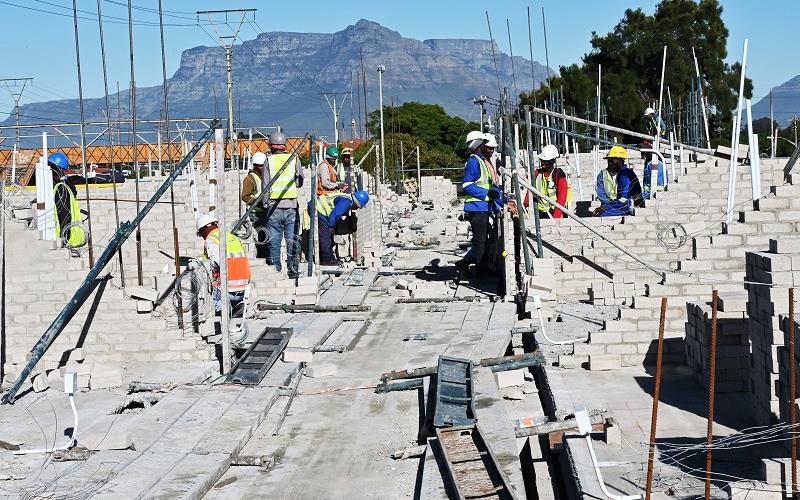
000 residents and their families, is making steady progress. Construction
started in October 2022 and Phase 2 is expected to be completed in mid-2024.
Today, 17 April 2023, the City's Acting Mayoral Committee Member for Human Settlements, Alderman James Vos, and officials in the Human Settlements Directorate visited the social housing project at the Goodwood Train Station site to check on its progress. The City has provided urban settlements development grants, development facilitation support and various incentives to the value of about R18 million to contribute to the financial viability and operational sustainability of this estimated R575m social housing development.
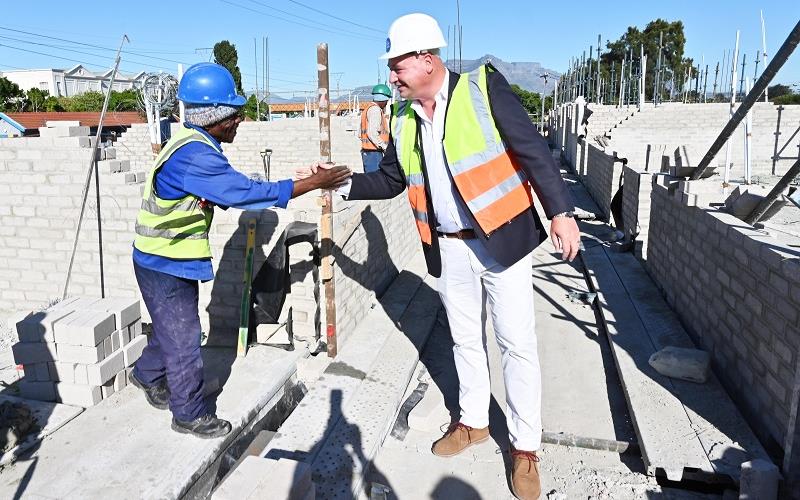
'I am pleased to see this project progressing steadily. It will be a life-changing project for the hundreds of residents who will soon be able to call a social housing unit in Goodwood home. The project is in line with the City's strategy of positioning housing developments and social housing projects closer to important economic hubs, city centres and transport hubs.
'The City and its partner, DCI Community Housing Services, look forward to handing over the housing opportunities. The City is without any doubt committed to developing housing opportunities in urban centres across the metro. We are building Cape Town, together,' said Alderman Vos.
Social housing offers affordable rental units for families with a combined monthly income of between R1 500 and R22 000.
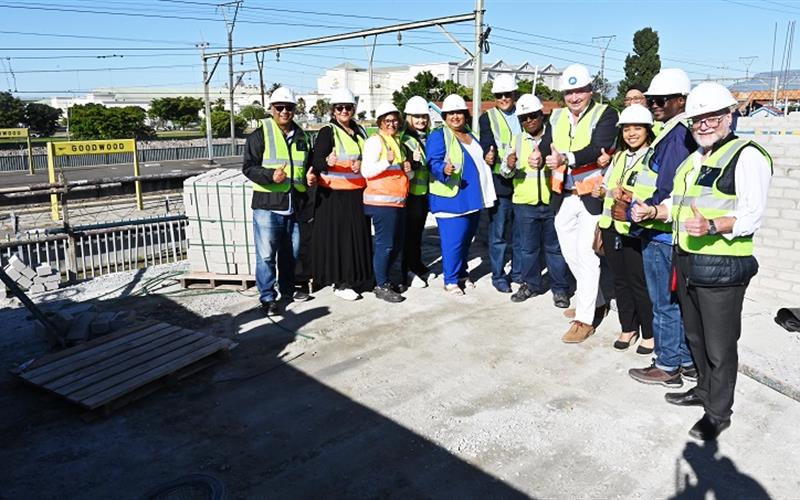
This is a partnership between the City of Cape Town, the Social Housing Regulatory Authority (SHRA), DCI Community Housing Services (the social housing institution undertaking the development), the Passenger Rail Agency of South Africa (Prasa), and the Infrastructure Fund, among others.
Facts about social housing:
- It is managed by accredited social housing institutions (SHIs).
- SHIs are solely dependent on rental income. They receive no operational grants. They are able to service their debt finance through rental income.
- As with any rental contract, tenants formally enter into lease agreements. The landlord is the SHI.
- If tenants do not adhere to their lease agreements, the responsible SHI will follow the necessary legal process. Tenants must therefore pay to stay as the rental money is used for the day-to-day operation and upkeep of the complex.
- The City has nothing to do with the day-to-day management of SHIs, the rental amount or evictions for not paying.
- Before potential beneficiaries can apply for social housing, they are required to register on the City's Housing Needs Register.
- Projects are developed on well-located, accessible land in and near urban centres.
- It is not low-income subsidised government housing, such as Breaking New Ground (or the commonly called RDP housing and it is not City Council Rental Units).
- It is managed with 24-hour security and access control.
- The City may sell City-owned land at a discounted price for social housing developments to make projects economically viable.
- Social housing offers improved access to social facilities and other amenities.
- A single grant subsidy can benefit on average five households versus one household for Council rental units.
- Social housing adds value to vacant pieces of land.
- Social housing has the potential to improve property values in an area.
For more information and to apply: https://www.capetown.gov.za/City-Connect/Apply/City-housing-and-properties/Housing-opportunities/Apply-for-social-housing
End
Published by:
City of Cape Town, Media Office